Skip to content
Curious Mind Cafe
  • Home
  • Online Courses
    • Embracing the Future: The Rise of Online Learning
  • Knowledge Hub
    • FAQ: Accelerated Learning Techniques
    • Using Flash Cards for Effective Learning
    • The Power of Spaced Repetition: A Guide for Better Learning
  • About
  • Wisdom Magazine
    • History of Wisdom Magazine
    • The Beginning of Wisdom Magazine
    • Wisdom Magazine Editions 1 – 12 1956
    • Wisdom Magazine Editions 13-24 1957-1958
    • Wisdom Magazine Editions 25-39 1958-1964
    • Wisdom Magazine Covers Gallery
  • Search Icon

Curious Mind Cafe

Dedicated to the Pursuit of Knowledge and Lifelong Learning

Encyclopedia Britannica 11th Edition, the best encyclopedia ever sold!
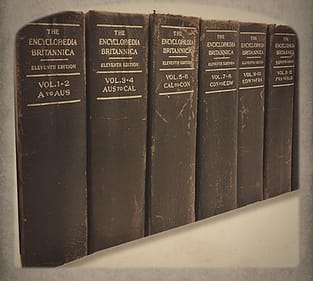
Encyclopedia Britannica 11th Edition, the best encyclopedia ever sold!

A Curious Mind
Encyclopedia Britannica 11th Edition

The Encyclopedia Britannica is universally recognized as a premier reference work. It has been around for more than two centuries, and its information has been updated and revised multiple times to assure accuracy. The Encyclopedia Britannica 11th edition, however, is often regarded as among the best of all time.

The eleventh edition of the Encyclopedia Britannica, published in 1910-1911, marked a radical departure from earlier editions. The publication of this version in the twenty-first century signaled a shift towards a more academic and scholarly treatment of the material. The 11th edition’s editors set out to make it the most exhaustive and reliable reference work ever assembled, and they achieved their goal.

The high quality of the articles is a major factor in the 11th edition’s reputation as one of the best. Around 1,500 contributors, including several world-renowned experts, gave their time and knowledge to the 11th edition’s editors. The final product was a set of articles that was not only educational, but also well-written and engaging. In addition, authors were encouraged to provide personal reflections and perspectives in their articles, which made the articles more interesting to read.

The 11th edition is highly regarded in part because it covers so much ground. The 11th edition’s editors set out to include every area of human knowledge, and they got very close to doing so. Everything from literature and the arts to science and technology was included in the book. The 11th edition was truly an all-inclusive reference work.

The stunning drawings and images in the 11th edition of the Encyclopedia Britannica were another highlight. The editors of the 11th edition understood the value of illustrations in simplifying otherwise difficult material. Thus, they included the encyclopedia with thousands of illustrations and photographs, which not only improved the reading experience but also brought the text to life.

Lastly, the historical significance of the 11th edition of the Encyclopedia Britannica cannot be overstated. The publication of the encyclopedia coincided with a period in which the world was undergoing profound shifts. The 11th edition’s editors understood how crucial it was to record the period’s scientific and technological developments for future generations. Hence, the encyclopedia covered then-recently developed fields like aviation, vehicles, and electricity.

As a result of its high-quality articles, extensive coverage, stunning illustrations, and contextual history, the 11th edition of the Encyclopedia Britannica is often regarded as among the best of its kind. It is still a great tool for scholars, academics, and anybody interested in expanding their knowledge of the world. The 11th edition of the Encyclopedia Britannica was published in 1911, but that hasn’t stopped it from being a source of inspiration and knowledge for readers around the world.

Encyclopedia Britannica 11th Edition Wikipedia:

Encyclopædia Britannica Eleventh Edition

Unlocking Your Learning Potential: 8 Techniques for Learning How to Learn

Unlocking Your Learning Potential: 8 Techniques for Learning How to Learn

A Curious Mind
Learning how to learn

Learning how to learn is an important skill that can aid in the acquisition of new knowledge and skills. Here are 8 tips and techniques to help you improve your learning ability:

  1. Set specific objectives: Before you begin learning, decide what you want to accomplish and what your learning objectives are. This will assist you in remaining focused and motivated throughout the learning process.
  2. Recognize your learning style: Because everyone learns differently, it is critical to understand your preferred learning style. Do you prefer visual aids, hands-on activities, or listening to learn? Knowing your learning style will assist you in selecting the most appropriate learning techniques for you.
  3. Active learning should be practiced: Active learning entails interacting with the material rather than simply reading or listening to it. Taking notes, summarizing key points, and asking questions are all examples of active learning.
  4. Use repetition and spaced learning to your advantage: Repetition and spaced learning can aid in the retention of information. Repetition of key concepts and ideas, as well as spacing out your learning sessions, will allow your brain to consolidate the information.
  5. Use a variety of learning methods: Use a variety of learning methods to help you retain information better. You could, for example, read a textbook, watch a video, and then discuss the subject with someone else.
  6. Take frequent breaks: Taking breaks can help you recharge your batteries and stay focused. To avoid burnout, give your brain time to process the information you’ve learned. Does Coloring Help Your Brain Between Study Breaks?
  7. Request feedback: Feedback can help you identify areas for improvement and keep you on track toward your learning objectives. Seek input from teachers, peers, and mentors.
  8. Maintain your organization: Staying organized can help you better manage your time and resources. To schedule your learning sessions and keep track of your progress, use a planner or calendar.
The Dark History of Book Banning and Why it Still Happens Today

The Dark History of Book Banning and Why it Still Happens Today

A Curious Mind
Dark History of Book Banning

Political, religious, and moral objections, as well as censorship, have led to the burning and banning of books throughout history. The practice of destroying and prohibiting the possession of books is not a recent development; in fact, it dates back to antiquity. Beginning with the ancient Greeks and continuing up to the current day, this article examines the historical backdrop of book banning by outlining the motivations and effects of doing so.

Ancient Greeks:
The first civilization in history to have regulations that governed the creation of books as well as their distribution were the ancient Greeks. Athens had a rule in place during the fourth century BCE that obliged publishers to present their books to the government for review and authorization before they could be sold to customers. The government ordered the destruction of any books that were judged offensive or subversive. The ancient Greeks held the view that texts that advocated for alternative viewpoints or questioned established norms posed a threat to their society.

Roman Empire:
The Roman Empire was notorious for its practice of publicly destroying books for political purposes. Augustus, the Emperor of Rome, gave the order to have the works of Virgil’s Aeneid burned because he believed they held information that could be used to overthrow his authority. In a similar manner, Emperor Diocletian in the third century CE issued an order for the destruction of all Christian publications, which resulted in the deaths of a large number of Christians who refused to forsake their faith.

Medieval Europe:
During the middle ages in Europe, the Catholic Church was the most powerful institution, and as a result, books were frequently destroyed for reasons related to religion. The Holy Office of the Inquisition was formed in the thirteenth century with the purpose of eradicating heretical beliefs and practices. Books that were believed to be heretical were burned, and these books included writings by Aristotle and Galileo. In a similar vein, the Protestant Reformation resulted in Catholic literature being burned and Protestant texts being made illegal to read.

Enlightenment Era:

For ideological or political motives, many books were destroyed during the Enlightenment period. During the French Revolution, books that were considered reactionary or counter-revolutionary were set on fire and burned. In a similar vein, the Alien and Sedition Acts that were passed in 1798 in the United States made it unlawful to print anything that was critical of the government.

Nazi Germany:

The Nazi regime in Germany in 1933 was responsible for what is now considered to be one of the most notorious instances of the burning of books. Books written by Jewish authors and other books that the Nazis considered to be anti-German or subversive were destroyed by the Nazi regime. Among the authors whose works were destroyed were Marx, Freud, and Einstein. The burning of books was just one component of a much larger campaign of repression and censorship that was carried out by the Nazi administration with the intention of eradicating any and all opposition.

Present Day:

In recent years, the issue of banning and burning books has also been linked to the idea of “wokeness.” “Wokeness” is a political and social movement that focuses on being aware of social justice issues like racism, sexism, and other forms of discrimination.
Some books that were once thought of as classics or widely accepted as part of the literary canon are now being looked at more closely because of what some people see as problematic content or how they portray certain groups. This has led to calls for these books to be taken out of schools and libraries or banned, usually by people who say they reinforce harmful stereotypes or push oppressive ideas.

But this has also led to debates about censorship and free speech, with many people saying that banning or censoring books sets a dangerous example and goes against the principles of academic freedom and intellectual inquiry. Others have worried that political correctness could lead to a “cancel culture” and the silencing of different points of view.

Also, the issue of burning books has been used as a way to protest or fight against certain ideas or governments. Some people have burned books as a way to protest against oppressive regimes or show disagreement with political leaders. But these kinds of actions have also been called destructive and counterproductive. Many people say that they hurt the values of free speech and democracy that they are trying to protect.

Overall, the issue of banning and burning books is still complicated and controversial, with both sides having different ideas and arguments.

The Reasons Why:
Although there are many different motivations, the concerns that lead to the burning and banning of books are typically political, religious, or moral in nature. Books that are deemed to be blasphemous or hurtful to a religious group’s beliefs are frequently banned by religious organizations as well as by governments or other ruling regimes because they are considered to be critical of the group’s policies or views. When books are thought to be immoral in some way, such as being pornographic or obscene, the authorities may decide to outlaw them or burn them.

The Results:
The repercussions of book burning and book bans are frequently quite negative. The eradication of knowledge and the tarnishing of cultural legacy are both exemplified by the destruction of books. Suppressing ideas can result in a reduction in critical thinking and creative output, in addition to restricting one’s ability to freely express themselves and speak their minds. Burning books and restricting access to information can, in severe circumstances, result in the victimization and even the loss of life for people who hold different viewpoints.

Throughout history, different grounds, including political, religious, and moral objections to censorship, have been used to justify the practice of burning books and banning books from libraries and bookstores. Burning books and banning books may be done for a variety of reasons, but the end consequence is almost always the same: a reduction in the amount of knowledge, cultural heritage, and freedom of speech and expression.

It is essential to have an awareness of the perils of censorship as well as the significance of protecting and fostering a variety of ideas and points of view. The right to freely read, write, and express oneself is one of the most fundamental of all human rights; any attempt to restrict this right constitutes a danger to democracy and the dignity of the human person. It is the responsibility of governments and society to foster an open and inclusive discourse that allows for the free interchange of ideas, regardless of how contentious or difficult those views may be.

Throughout history, there has been a continuing struggle against the practice of censorship and the banning of books. For many decades, groups such as PEN International and the American Library Association have been fighting for people’s rights to read anything they want and for the protection of their intellectual freedom. The public uproar and demonstrations against the banning of books have also been helpful in raising attention to the issue and pressing governments to change their policies.

In conclusion, the historical backdrop of burning and banning books demonstrates how the repression of ideas and knowledge may have disastrous effects for societies as well as for individuals. It is imperative that the significance of intellectual freedom be acknowledged, as is the necessity of safeguarding it against censorship and other forms of oppression.

Curious Mind Cafe Statement on Book Banning

Additional Book Banning Information:

PEN International: PEN International was founded in London, UK, in 1921, simply as PEN. Today it operates across five continents in over 100 countries, with 147 Centres supporting unhampered transmission of thought within each nation and between all nations. PEN International is guided by the ideals of the PEN Charter, which expresses every member’s commitment to protecting the free exchange of ideas, and promoting the value of literature. Pen International Website

American Library Association: The American Library Association (ALA) is a nonprofit organization based in the United States that promotes libraries and library education internationally.
American Library Association Website
American Library Association Fight Censorship Page

Unlock your reading potential: How fast do you read? and How many books can you read in a year?

Unlock your reading potential: How fast do you read? and How many books can you read in a year?

A Curious Mind
How many books can you read in a year?

Do you like to read? Do you think of yourself as an accomplished reader? Some people haven’t read a book in a year, while others are reading two or three books at once. How many books should you read if you want to improve your general knowledge of the world?
The number of books you should read in a year to improve your general knowledge is determined by several factors, including your reading speed, the complexity of the books, your prior knowledge, and the amount of time you have available to read.
As a general rule, reading one book per month is a good place to start for most people. This equates to reading 12 books in a year. You can, however, aim to read more books if you have more time and can read faster.
It’s also critical to select books that are relevant to your interests and will broaden your knowledge in areas where you want to learn more. Reading widely in a variety of subjects can also help you broaden your general knowledge.
Remember that it’s not just about how many books you read; it’s also about the quality of your reading and how much you remember from what you’ve read. Take your time, read carefully, and think about what you’ve learned from each book.

How Fast Do You Read?

Would you like to calculate the number of books you can read in a specific period of time? You can use the following straightforward formula to estimate your reading speed and the number of books you can finish in a given period of time:

  • Choose a book that you haven’t read before and that has a known word count. You can usually find this information on the back cover or on the publisher’s website.

  • Set a timer for 10 minutes and start reading the book at your normal pace. Try not to speed up or slow down too much, as this will affect the accuracy of your results.

  • When the timer goes off, stop reading and make note of the page number you reached. Count the number of words on that page and divide it by the number of minutes you read for. This will give you your reading speed in words per minute (wpm).

  • To determine how many books you can finish in a given amount of time, multiply your reading speed in wpm by the total number of minutes you plan to devote to reading during that time period. Then, divide this number by the average word count of the books you plan to read. This will give you the approximate number of books you can finish.

Here’s an example:
Let’s say you read for 30 minutes and reach page 25 of a book with 300 pages and an average of 250 words per page. You count 200 words on that page.
Your reading speed = 200 words / 10 minutes = 20 wpm.
If you plan to read for 10 hours (600 minutes) in the next week, you can estimate how many books you can finish by using the formula:
Books = (Reading speed x Total minutes) / Average word count
Books = (20 wpm x 600 minutes) / 75,000 words (average word count of a 300-page book with 250 words per page)
Books = 0.16 or about 1 book
Therefore, you can expect to finish about one book in the next week if you read for 10 hours at a speed of 20 wpm.
Try this formula across a variety of reading material, easy books, magazine articles, text books, etc. That will give you a better overall idea on your average reading speed.

Making reading a top priority will allow you to accomplished your goal of reading a set number of books per year. Finding just one hour per day to read will go a long way towards that goal. Set a goal, block off some time and start reading!

New ways to acquire knowledge and skills in the age of AI

New ways to acquire knowledge and skills in the age of AI

A Curious Mind
Using AI to acquire new knowledge and skills

There has been a dramatic shift away from more conventional methods of education and training in the wake of the advent of AI. Artificial intelligence has made it possible for people to learn and develop their abilities in novel and tailored ways. This has made it easier for people to learn new things and grow professionally. This article will discuss some of the novel approaches to education and training that have emerged in the wake of artificial intelligence.

Virtual Classrooms
Online education systems have been available for a while, but recent developments in AI have made them much more adaptable and engaging for students. Artificial intelligence (AI) algorithms are used by online education platforms like Coursera, Udemy, and edX to tailor each student’s learning experience to their own interests and needs. These sites allow students to study when and where they have time, making it possible for even the busiest people to advance their education.

Reality Simulation and Augmentation
Learning and education are undergoing a radical transformation because of advances in virtual and augmented reality technologies. Learners are able to put themselves in a simulated setting and get practical knowledge thanks to these technological advancements. Virtual reality simulations have made it possible for medical students to practice procedures, while augmented reality has allowed architects to see their plans in real time. These innovations make education more interesting and interactive, speeding up the process through which people can learn new things.

Conversational AI and Smart Tutors
The use of chatbots and intelligent tutors driven by AI allows for highly customized educational experiences for each user. These programs utilize NLP (natural language processing) to read the mind of the student and modify the curriculum accordingly. An artificial teacher, for instance, can walk you through solving a math issue step by step, and a language-learning chatbot can give you feedback on your grammar and pronunciation. These resources make it possible for people to increase their knowledge and abilities in a way that is unique to them.

Learning Together
Collaborative learning has been shown to be an efficient method of information and skill acquisition. The development of AI has made possible the worldwide spread of cooperative study. Collaboration on coding and data science projects is made possible by online hubs like GitHub and Kaggle, while introductions to subject-matter experts are made possible by social networking sites like LinkedIn and Twitter. Collaborative education allows students to gain knowledge from one another and make connections with other experts in their industry.

Conclusion
The possibilities for learning and growth are greater than ever before in the AI era. Collaborative learning, online learning platforms, virtual and augmented reality, chatbots and intelligent tutors, and so on are all examples of innovative approaches to education and skill development. Because of these technological developments, more people than ever before have access to quality education and the resources they need to build successful professions. We may anticipate increasingly more creative approaches to education and training as AI advances.

Posts navigation

OLDER POSTS
NEWER POSTS

Recent Posts

  • Four Simple Habits to Combat Anxiety, Stress, Brain Fog, and Improve Sleep
  • Explore Art History for Free: 10 Outstanding Online Courses from World-Renowned Museums
  • Are you a Deep Thinker? Questions to Ponder
  • Unlocking the Power of Mind Mapping: A Comprehensive Guide
  • Mnemonics: The Magic Memory Tool
  • Flash Cards FAQ: Everything You Need to Know
  • Boost Your IQ: 10 Brain Hacks to Enhance Your Intelligence and Unlock Your Brains Potential
  • Improve Your Brain by Practicing Cursive Writing
  • Unlocking the Past: Seniors Find Password Inspiration in Memory Lane
  • The Science of Curiosity: Why We’re Wired to Explore

Archives

  • August 2024
  • July 2024
  • April 2024
  • December 2023
  • June 2023
  • May 2023
  • April 2023
  • March 2023
  • February 2023
  • January 2023

Categories

  • Accelerated Learning
  • AI Learning
  • Authors
  • Books and Reading
  • Curiosity
  • Knowledge
  • Lifelong Learning
  • Online Courses
  • Study Tips
  • Wisdom Magazine

AI Albert Einstein anxiety art artificial intelligence authors book banning books brain brain fog brainstorming chatgpt curiosity curious cursive deep thinker educators flash cards free courses history interleaving IQ knowledge learning lifelong learner loci memory mind mapping mindset mnemonics online courses online learning passwords read reading Science seniors sleep stress students study study tips well-read wisdom writing

  • Home
  • Online Courses
    • Embracing the Future: The Rise of Online Learning
  • Knowledge Hub
    • FAQ: Accelerated Learning Techniques
    • Using Flash Cards for Effective Learning
    • The Power of Spaced Repetition: A Guide for Better Learning
  • About
  • Wisdom Magazine
    • History of Wisdom Magazine
    • The Beginning of Wisdom Magazine
    • Wisdom Magazine Editions 1 – 12 1956
    • Wisdom Magazine Editions 13-24 1957-1958
    • Wisdom Magazine Editions 25-39 1958-1964
    • Wisdom Magazine Covers Gallery

  • Contact Curious Mind Cafe
  • Privacy Policy
  • Terms and Conditions
  • Affiliate Links Disclaimer
  • Site Map
© 2026   All Rights Reserved Curious Mind Cafe