The Dark History of Book Banning and Why it Still Happens Today
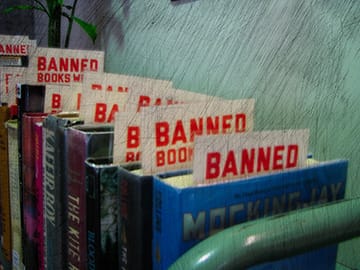
Political, religious, and moral objections, as well as censorship, have led to the burning and banning of books throughout history. The practice of destroying and prohibiting the possession of books is not a recent development; in fact, it dates back to antiquity. Beginning with the ancient Greeks and continuing up to the current day, this article examines the historical backdrop of book banning by outlining the motivations and effects of doing so.
Ancient Greeks:
The first civilization in history to have regulations that governed the creation of books as well as their distribution were the ancient Greeks. Athens had a rule in place during the fourth century BCE that obliged publishers to present their books to the government for review and authorization before they could be sold to customers. The government ordered the destruction of any books that were judged offensive or subversive. The ancient Greeks held the view that texts that advocated for alternative viewpoints or questioned established norms posed a threat to their society.
Roman Empire:
The Roman Empire was notorious for its practice of publicly destroying books for political purposes. Augustus, the Emperor of Rome, gave the order to have the works of Virgil’s Aeneid burned because he believed they held information that could be used to overthrow his authority. In a similar manner, Emperor Diocletian in the third century CE issued an order for the destruction of all Christian publications, which resulted in the deaths of a large number of Christians who refused to forsake their faith.
Medieval Europe:
During the middle ages in Europe, the Catholic Church was the most powerful institution, and as a result, books were frequently destroyed for reasons related to religion. The Holy Office of the Inquisition was formed in the thirteenth century with the purpose of eradicating heretical beliefs and practices. Books that were believed to be heretical were burned, and these books included writings by Aristotle and Galileo. In a similar vein, the Protestant Reformation resulted in Catholic literature being burned and Protestant texts being made illegal to read.
Enlightenment Era:
For ideological or political motives, many books were destroyed during the Enlightenment period. During the French Revolution, books that were considered reactionary or counter-revolutionary were set on fire and burned. In a similar vein, the Alien and Sedition Acts that were passed in 1798 in the United States made it unlawful to print anything that was critical of the government.
Nazi Germany:
The Nazi regime in Germany in 1933 was responsible for what is now considered to be one of the most notorious instances of the burning of books. Books written by Jewish authors and other books that the Nazis considered to be anti-German or subversive were destroyed by the Nazi regime. Among the authors whose works were destroyed were Marx, Freud, and Einstein. The burning of books was just one component of a much larger campaign of repression and censorship that was carried out by the Nazi administration with the intention of eradicating any and all opposition.
Present Day:
In recent years, the issue of banning and burning books has also been linked to the idea of “wokeness.” “Wokeness” is a political and social movement that focuses on being aware of social justice issues like racism, sexism, and other forms of discrimination.
Some books that were once thought of as classics or widely accepted as part of the literary canon are now being looked at more closely because of what some people see as problematic content or how they portray certain groups. This has led to calls for these books to be taken out of schools and libraries or banned, usually by people who say they reinforce harmful stereotypes or push oppressive ideas.
But this has also led to debates about censorship and free speech, with many people saying that banning or censoring books sets a dangerous example and goes against the principles of academic freedom and intellectual inquiry. Others have worried that political correctness could lead to a “cancel culture” and the silencing of different points of view.
Also, the issue of burning books has been used as a way to protest or fight against certain ideas or governments. Some people have burned books as a way to protest against oppressive regimes or show disagreement with political leaders. But these kinds of actions have also been called destructive and counterproductive. Many people say that they hurt the values of free speech and democracy that they are trying to protect.
Overall, the issue of banning and burning books is still complicated and controversial, with both sides having different ideas and arguments.
The Reasons Why:
Although there are many different motivations, the concerns that lead to the burning and banning of books are typically political, religious, or moral in nature. Books that are deemed to be blasphemous or hurtful to a religious group’s beliefs are frequently banned by religious organizations as well as by governments or other ruling regimes because they are considered to be critical of the group’s policies or views. When books are thought to be immoral in some way, such as being pornographic or obscene, the authorities may decide to outlaw them or burn them.
The Results:
The repercussions of book burning and book bans are frequently quite negative. The eradication of knowledge and the tarnishing of cultural legacy are both exemplified by the destruction of books. Suppressing ideas can result in a reduction in critical thinking and creative output, in addition to restricting one’s ability to freely express themselves and speak their minds. Burning books and restricting access to information can, in severe circumstances, result in the victimization and even the loss of life for people who hold different viewpoints.
Throughout history, different grounds, including political, religious, and moral objections to censorship, have been used to justify the practice of burning books and banning books from libraries and bookstores. Burning books and banning books may be done for a variety of reasons, but the end consequence is almost always the same: a reduction in the amount of knowledge, cultural heritage, and freedom of speech and expression.
It is essential to have an awareness of the perils of censorship as well as the significance of protecting and fostering a variety of ideas and points of view. The right to freely read, write, and express oneself is one of the most fundamental of all human rights; any attempt to restrict this right constitutes a danger to democracy and the dignity of the human person. It is the responsibility of governments and society to foster an open and inclusive discourse that allows for the free interchange of ideas, regardless of how contentious or difficult those views may be.
Throughout history, there has been a continuing struggle against the practice of censorship and the banning of books. For many decades, groups such as PEN International and the American Library Association have been fighting for people’s rights to read anything they want and for the protection of their intellectual freedom. The public uproar and demonstrations against the banning of books have also been helpful in raising attention to the issue and pressing governments to change their policies.
In conclusion, the historical backdrop of burning and banning books demonstrates how the repression of ideas and knowledge may have disastrous effects for societies as well as for individuals. It is imperative that the significance of intellectual freedom be acknowledged, as is the necessity of safeguarding it against censorship and other forms of oppression.
Curious Mind Cafe Statement on Book Banning
Additional Book Banning Information:
PEN International: PEN International was founded in London, UK, in 1921, simply as PEN. Today it operates across five continents in over 100 countries, with 147 Centres supporting unhampered transmission of thought within each nation and between all nations. PEN International is guided by the ideals of the PEN Charter, which expresses every member’s commitment to protecting the free exchange of ideas, and promoting the value of literature. Pen International Website
American Library Association: The American Library Association (ALA) is a nonprofit organization based in the United States that promotes libraries and library education internationally.
American Library Association Website
American Library Association Fight Censorship Page