Skip to content
Curious Mind Cafe
  • Home
  • Online Courses
    • Embracing the Future: The Rise of Online Learning
  • Knowledge Hub
    • 25 Power Learning Prompts
    • FAQ: Accelerated Learning Techniques
    • Using Flash Cards for Effective Learning
    • The Power of Spaced Repetition: A Guide for Better Learning
  • About
  • Wisdom Magazine
    • History of Wisdom Magazine
    • The Beginning of Wisdom Magazine
    • Wisdom Magazine Editions 1 – 12 1956
    • Wisdom Magazine Editions 13-24 1957-1958
    • Wisdom Magazine Editions 25-39 1958-1964
    • Wisdom Magazine Covers Gallery
  • Search Icon

Curious Mind Cafe

Dedicated to the Pursuit of Knowledge and Lifelong Learning

Author

A Curious Mind

Posts by A Curious Mind

A Brief History of Albert Einstein: From His Quirks to His Accomplishments

A Brief History of Albert Einstein: From His Quirks to His Accomplishments

A Curious Mind
Albert Einstein - Curious Mind Cafe

“Imagination is more important than knowledge. Knowledge is limited. Imagination encircles the world.”

Albert Einstein
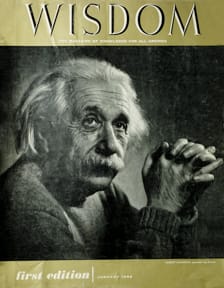
Albert Einstein - Wisdom Magazine, January 1956

Albert Einstein appeared on the cover of the first issue of Wisdom Magazine, published in January 1956, only eight months after his death in April 1955. What better way to launch a new magazine devoted to wisdom and knowledge than by featuring one of the world’s most renowned scientists?

Albert Einstein was born in Germany in 1879 and is best known for his theory of relativity, which revolutionized physics and had a profound impact on our understanding of the universe.

Einstein was a true genius, but his early years were difficult. He struggled in school, particularly with language learning, making it difficult for him to gain admission to university. He persisted, however, and eventually received a PhD in physics from the University of Zurich.

Einstein published a series of papers in 1905 that laid the groundwork for modern physics. His theory of special relativity, which demonstrated that the laws of physics are the same for all observers moving at a constant speed relative to each other, was among these papers. This theory had a significant impact on our understanding of space and time, and it laid the groundwork for Einstein’s subsequent work on general relativity.

Einstein’s work on general relativity, published in 1915, demonstrated that gravity, rather than being a force that pulls objects together, is a curvature in the fabric of space-time caused by the presence of massive objects. This theory helped to explain planet motion and black hole behavior, and it is still a fundamental part of modern physics.

Not only was Einstein a brilliant scientist, but a devoted pacifist and humanitarian as well. He was an outspoken opponent of war and a strong supporter of civil rights and international cooperation. He was also a loving father and husband, and despite his many accomplishments, he remained humble.

Today, Einstein’s legacy lives on through the numerous advances in physics made since his time, as well as his contributions to philosophy and our understanding of the world around us. He is a true scientific icon and a source of inspiration for future generations.

Here are some of Albert Einstein’s most famous quotes:

“Try not to become a man of success, but rather try to become a man of value.”

“Insanity: doing the same thing over and over again and expecting different results.”


“The important thing is not to stop questioning. Curiosity has its own reason for existing.”


“Two things are infinite: the universe and human stupidity; and I’m not sure about the universe.”

5 Interesting facts you may not know about Albert Einstein:

  • Einstein had a love for sailing and was an avid sailor. He once said, “The only thing that scares me more than space aliens is the idea that there aren’t any space aliens. We can’t be the best that creation has to offer. I pray we’re not all there is. If so, we’re in big trouble.”
  • Einstein’s brain was preserved after his death and studied by scientists. They found that his brain had more glial cells than the average brain, which some scientists believe may have contributed to his exceptional intelligence.
  • Einstein was offered the presidency of Israel in 1952, but he declined the offer.
  • Einstein was a fan of music and played the violin. He once said, “If I were not a physicist, I would probably be a musician. I often think in music. I live my daydreams in music. I see my life in terms of music.”
  • Einstein was known for his unruly hair, which became his trademark. However, he once cut it off and sent it to a fan who had expressed admiration for his work, writing in the accompanying letter, “I have noticed that you have taken a particular interest in my hair. I have concluded from the various letters that it is probably no longer necessary to explain that it is not a wig.”

Links:

Wikipedia: Albert Einstein

The Nobel Prize: Albert Einstein – Biographical

Encyclopaedia Britannica: Albert Einstein

What is a Philomath? and Are You One?

What is a Philomath? and Are You One?

A Curious Mind
What is a philomath? - Curious Mind Cafe

The term “philomath” is commonly used to describe an individual who has a deep appreciation for learning new things throughout their lives. The term “philomath” comes from the Greek words “philos,” meaning “loving,” and “mathema,” meaning “learning” or “science.” This individual has a strong interest in learning and growing their understanding of a wide range of topics, and they are constantly searching out new information and experiences to add to their repertoire. They have a deep-seated interest in expanding their knowledge and could be described as a “life-long learner.” 

A philomath is someone who is naturally inquisitive, eager, and enthusiastic about the investigation of novel ideas and concepts. They have an interest in learning about a wide range of topics and may choose to further their knowledge through formal schooling, independent study, or informal means such as reading, attending lectures, or taking part in conversations.

They are constantly questioning things and looking for solutions, which lends credence to the common characterization of them as inquisitive and curious. A person who places a high emphasis on understanding the fundamental principles and the more profound meanings of the world that surrounds them is someone who is said to be a seeker of wisdom. They engage in self-discovery and introspection as a means of gaining a deeper understanding of both themselves and the world around them. As a result, they are thoughtful and contemplative.

If you’re wondering if you’re a philomath, consider the following indicators:

  1. You’re interested in a wide range of topics, including science, history, philosophy, art, and a variety of other topics.
  2. You enjoy pushing yourself. You’re willing to tackle difficult topics and concepts, even if they’re difficult to grasp.
  3. You do a lot of reading. You enjoy reading books, articles, and other materials that help you learn and understand new things.
  4. You enjoy discussing and debating ideas. Even if you don’t always agree with others, you enjoy having thoughtful discussions and debates with them.
  5. You place a high value on education. You value education not only for practical reasons, such as getting a good job, but also for personal growth and development.

If you have many of these characteristics, you may be a philomath. However, keep in mind that everyone’s interests and passions are unique, and there is no one “right” way to be a philomath.

Wikipedia:

Philomath

Does coloring help your brain between study breaks?

Does coloring help your brain between study breaks?

A Curious Mind
Coloring between study breaks

Coloring is an excellent activity that can be used to both give your mind a breather from the stress of studying as well as boost your cognitive performance. If you’re taking a break from your studies, here are a few ways coloring might help your brain:

Reduces stress: Coloring can help alleviate feelings of tension and anxiety by inducing a state of calm in the person doing the coloring. Coloring induces a meditative state in the brain, which lowers activity in the amygdala, the region of the brain responsible for the “fight or flight” reaction.

Improves focus: Coloring involves attention and concentration, which can enhance your ability to focus when you return to your studies. Coloring can help improve your capacity to focus because it requires focus and concentration. Dopamine, a neurotransmitter that plays a role in the regulation of attention and motivation, is produced in the brain when coloring focuses attention.

Boosts creativity: Coloring can help you delve into your creative side and come up with fresh ideas. Coloring is a great way to boost your creativity. Coloring, for example, stimulates the production of alpha waves in the brain, which are linked to creative thinking and finding solutions to problems.

Enhances fine motor skills: Coloring can enhance your fine motor abilities, which in turn can have a beneficial effect on your general cognitive functioning. Coloring can also be a relaxing and enjoyable activity. Activities that require the use of one’s fine motor skills, such as writing, typing, and operating a computer mouse, are essential.

Coloring, in general, can be a fun, pleasurable and productive way to give your brain a much-needed rest while you’re taking a break from studying something. Your cognitive functioning, as well as your capacity to concentrate and learn new information, may benefit from this as well. So take a break from your studies to color! Here are some sites for free coloring pages:

Adult coloring pages to print for free:

Adult Coloring Pages

Free Printable Adult Coloring Pages

1,500+ Free Adult Coloring pages

Who was Arnold Toynbee?

Who was Arnold Toynbee?

A Curious Mind
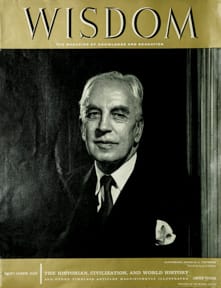
Arnold Toynbee Wisdom Magazine September 1958

The 27th edition of Wisdom magazine published in September 1958, featured Arnold Toynbee on the cover. But just who was Arnold Toynbee?

Arnold Toynbee, born in 1889, was a British historian and author. He is widely regarded as one of the twentieth century’s most influential historians, owing to his extensive writings on world history and civilization.

Toynbee received his education at Oxford University, where he developed an interest in history and classical studies. He later became a lecturer at the University of London after serving in British Intelligence during World War I. He spent the majority of his career teaching and conducting research in history, economics, and international relations at universities.

Toynbee’s most famous work is “A Study of History,” his twelve-volume magnum opus, which he worked on from 1934 until his death in 1975. The work investigates the rise and fall of civilizations throughout history, employing a comparative approach to analyze the patterns and forces that have shaped human development. The book has received praise for its broad scope and interdisciplinary approach, as well as Toynbee’s engaging writing style and ability to link historical events to larger cultural and philosophical trends.

Toynbee was an advocate for social justice and international cooperation in addition to his work as a historian. He believed that studying history could help us understand how human societies are interconnected and the importance of working together to create a better future.

Arnold Toynbee was a brilliant and influential historian who contributed significantly to our understanding of human history and civilization. His work continues to inspire and educate scholars, students, and readers worldwide.

Wikipedia Link: Arnold J. Toynbee

Discovering the Past: The Joy of Reading Old Books

Discovering the Past: The Joy of Reading Old Books

A Curious Mind
The Joy of reading old books

Imagine what it would be like to open old books and be taken to a different time and place. As you flip through the worn pages, you can’t help but think about all the other curious people who have read it before you. Did they find something new or prove something that was already known? Did they enjoy the story, or did it teach them something? Who was the first person to own it? Did they care about this book or just put it on a bookshelf? Was it a cherished gift or something found at a dusty flea market? There’s something magical about holding a piece of history in your hands, no matter where it came from. Even though some of the information may be old and outdated, the lessons and stories in old and vintage books are timeless, making them a treasure trove of benefits waiting to be found. Reading vintage or older books have a number of benefits that include the following:

Contextual history: By reading vintage books, readers can gain a better understanding of history and how it has shaped our current world. These books provide insight into the cultural, social, and political context of the time period in which they were written. It gives you a firsthand look at the past through the author’s eyes.

Perspective shifts: Reading old books can help readers appreciate progress and see how viewpoints and beliefs have changed over time.

Style and language in writing: Vintage books provide a window into the literary style of a different era, as well as a unique glimpse at how language was used and written in the past.

New information: Even if some of the information in older books is out of date, readers may be able to learn something new from them. For example, a book on financial matters written in the mid-twentieth century may provide alternative points of view and suggestions that are still relevant today.

History and culture: History and culture are important for understanding how societies have changed over time and how we live now. Old books are a great way to learn about the past and how people thought and lived in different times. By reading old books, we can learn about the beliefs, values, and traditions that have shaped our societies and civilizations. Furthermore, old books help to preserve cultural heritage by keeping important works alive.

Vintage books can be a valuable source of knowledge and insight, providing a unique perspective and broadening one’s understanding of the world, even if they contain outdated information. However, the information may be out of date in terms of current views and perspectives, and some readers may find certain words or passages offensive, but they must be understood in the context in which they were written.

Posts navigation

OLDER POSTS
NEWER POSTS

Recent Posts

  • Four Simple Habits to Combat Anxiety, Stress, Brain Fog, and Improve Sleep
  • Explore Art History for Free: 10 Outstanding Online Courses from World-Renowned Museums
  • Are you a Deep Thinker? Questions to Ponder
  • Unlocking the Power of Mind Mapping: A Comprehensive Guide
  • Mnemonics: The Magic Memory Tool
  • Flash Cards FAQ: Everything You Need to Know
  • Boost Your IQ: 10 Brain Hacks to Enhance Your Intelligence and Unlock Your Brains Potential
  • Improve Your Brain by Practicing Cursive Writing
  • Unlocking the Past: Seniors Find Password Inspiration in Memory Lane
  • The Science of Curiosity: Why We’re Wired to Explore

Archives

  • August 2024
  • July 2024
  • April 2024
  • December 2023
  • June 2023
  • May 2023
  • April 2023
  • March 2023
  • February 2023
  • January 2023

Categories

  • Accelerated Learning
  • AI Learning
  • Authors
  • Books and Reading
  • Curiosity
  • Knowledge
  • Lifelong Learning
  • Online Courses
  • Study Tips
  • Wisdom Magazine

AI Albert Einstein anxiety art artificial intelligence authors book banning books brain brain fog brainstorming chatgpt curiosity curious cursive deep thinker educators flash cards free courses history interleaving IQ knowledge learning lifelong learner loci memory mind mapping mindset mnemonics online courses online learning passwords read reading Science seniors sleep stress students study study tips well-read wisdom writing

  • Home
  • Online Courses
    • Embracing the Future: The Rise of Online Learning
  • Knowledge Hub
    • 25 Power Learning Prompts
    • FAQ: Accelerated Learning Techniques
    • Using Flash Cards for Effective Learning
    • The Power of Spaced Repetition: A Guide for Better Learning
  • About
  • Wisdom Magazine
    • History of Wisdom Magazine
    • The Beginning of Wisdom Magazine
    • Wisdom Magazine Editions 1 – 12 1956
    • Wisdom Magazine Editions 13-24 1957-1958
    • Wisdom Magazine Editions 25-39 1958-1964
    • Wisdom Magazine Covers Gallery

  • Contact Curious Mind Cafe
  • Privacy Policy
  • Terms and Conditions
  • Affiliate Links Disclaimer
  • Site Map
© 2026   All Rights Reserved Curious Mind Cafe